










Other resources
HIV/AIDS programme

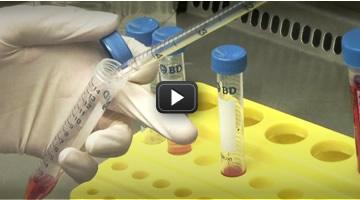
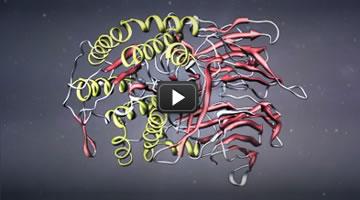
Programme about science communication and prevention on HIV/AIDS Developed by IrsiCaixa and the Foundation “la Caixa”
EuroStemCell
EuroStemCell project unites more than 90 European stem cell and regenerative medicine research labs to engage with the public on stem cells. In their website you will find information on stem cells, the latest research news and a whole section with resources for educators that include films, classroom activities, multimedia tools and images.
Centre of the Cell
Centre of the Cell is an educational charity dedicated to inspiring curiosity and learning by connecting science to everyday life. Centre of the Cell is an online resource, a science education centre and outreach project aimed at young people, teachers, families and community groups. In their website you will find a wide range of interactives as well as classroom resources for different age groups.
Nanoyou
NANOYOU (Nano for Youth) is a project funded by the European Commission's Seventh Framework Programme that aims to increase young people’s basic understanding of nanotechnologies (NT) and to engage them in a dialogue about its ethical, legal and social aspects (ELSA). In the NANOYOU portal you’ll find a wide range of resources such as hands-on experiments, virtual labs and role games.
Scientix
Scientix is a community for science education in Europe that was created to facilitate regular dissemination and sharing of know-how and best practices in science education across the European Union. Scientix offers a wide range of resources in several European languages and is open to anyone interested in science education.
Play Decide
Play Decide has been created by FUND, a project supported by the European Commission to stimulate the use of discussion games and other debate formats in European cities for the development of a scientific culture at the local level. In their website you can find discussion games on several topics that include HIV/AIDS, Orphan drugs and Stem cells amongst others.
Biotechnology lab program
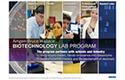
The Amgen-Bruce Wallace Biotechnology lab program partners with schools and industry to bring inquirey-based, hands-on science into classrooms to expand scientific literacy and the excitement of discovery. In their website you will find experiment protocols based on techniques that are used in current research as well as pre-lab notes and presentations to help teachers prepare the lab lessons.
Dolan DNA Learning Center

The Dolan DNA Learning Center, from Cold Spring Harbor Laboratory, aims to inform citizens on the principles of genetics and disease risk by giving high school students the opportunity to perform hands-on experiments with DNA and to access the genetic information they need to make informed health care choices. In this website you will find links to several education websites they’ve developed that relate to different aspects of DNA as well as resources for teachers such as an animation gallery.
Wellcome Trust
The Wellcome Trust is a charitable foundation that aims to improve human and animal health. As well as funding research, the Wellcome Trust supports public engagement and education, and has many teaching resources in its website, including the Big Picture magazine, that devotes each of its issues to a different health topic.
BioInteractive, teach ahead of the textbook

BioInteractive is a website developed by the Howard Hughes Medical Institute that offers science teachers and students a wide range of materials to learn about biomedicine. In their website you will find videos, animations, virtual labs, recorded lectures and classroom activities that relate to these tools.
Learn.Genetics
Learn.Genetics is a website from the University of UTAH with resources for teachers on genetics tackling topics that include stem cells, cloning, gene therapy and epigenetics. The resources include virtual labs, animations, information and lesson plans.
EIBE
The European Initiative for Biotechnology Education (EIBE) seeks to promote skills, enhance understanding and facilitate public debate throughout Europe. It was founded in 1991 and since then EIBE has become an active European multidisciplinary network of experts in biotechnology education drawn from 20 centres in 17 European countries. In EIBE’s website you will find teaching units on topics such as human genetics, immunology and transgenic organisms.
National Centre for Biotechnology Education
Established in 1984, the National Centre for Biotechnology Education, from the Univeristy of Reading, was a pioneering school biotechnology centre in the world. Over time it has gained an international reputation for the development of innovative educational resources and its materials have been translated into many languages. In their website you will find practical protocols to carry experiments in the school lab.